

Artificial Intelligence is changing the way students learn and how teachers teach. The Future of AI in Learning is becoming more important as smart tools assess a student’s level, suggest better study methods, and explain difficult ideas in ways that match how each student learns best.
At the same time, AI helps teachers by taking on routine tasks so they can spend more time teaching and mentoring.
This article looks at the future of AI in learning. We will explore how AI can make learning more personal, how AI tutors are supporting college students, how teacher training will evolve, how education systems will change, and even how AI affects roles linked with education like finance. Along the way you’ll get practical tips you can use right away.
Future of AI in Learning and Development
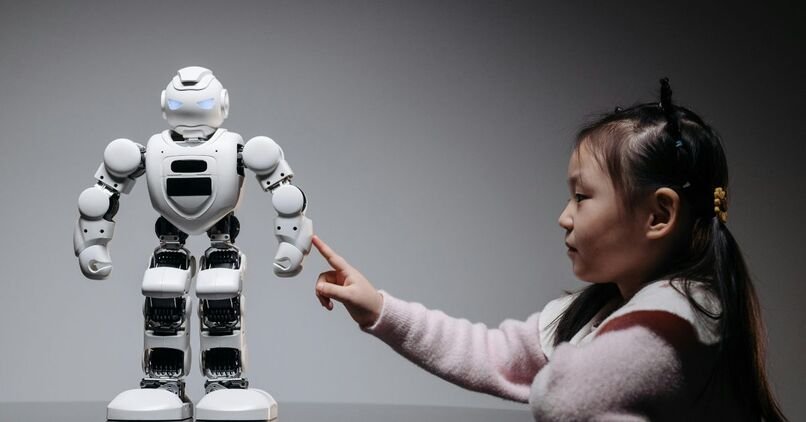
The combination of AI and learning is often called Education 4.0 a shift that makes learning more flexible, effective, and focused on the skills needed for the future workforce. Simply put, AI is making education better, not trying to take it over.
The most important takeaway is this: AI will not replace teachers. Instead, it will act as a super-assistant, empowering teachers and fundamentally transforming the learning experience.
The AI Assistant in the Classroom
For years, teachers have spent countless hours on routine tasks like grading quizzes, tracking attendance, and creating basic lesson outlines. This time spent on administrative duties pulls them away from the most critical part of their job: directly teaching and connecting with students.
This is where the true power of AI lies. AI tools can easily handle these repetitive, managerial tasks.
- Automated Grading: AI can instantly score multiple-choice questions or even provide feedback on grammar and structure in essays, giving students fast results and saving the teacher hours of work.
- Generating Materials: Teachers can ask generative AI tools to create different versions of a quiz, draft a parent newsletter, or build a detailed rubric for an assignment in minutes.
By automating these duties, AI frees up educators to focus on what humans do best: providing mentorship, fostering critical thinking, leading complex discussions, and offering emotional support. AI augments human-led teaching, creating a richer learning environment where the educator can thrive.
Teaching Responsible Use
Since students are already using AI, the future of learning involves teaching them how to use it responsibly and ethically. We must reframe the conversation from “Don’t use AI for cheating” to “Use AI as a powerful tool to enhance your work.”
For example, students can learn to use AI for:
- Brainstorming: Generating initial ideas for a project.
- Outlining: Creating a structure for an essay or report.
- Source Lists: Getting a starting point for research (though sources must always be verified by the student).
- Simplifying Complex Concepts: Asking AI to explain a difficult historical or scientific concept at a simpler reading level, which they can then rebuild and analyze for deeper understanding.
This approach teaches students a crucial skill for the future workforce: using groundbreaking technology to succeed.
Personalized Learning with AI Software
One of the biggest dreams in education is providing truly individualized instruction. AI is finally making this dream a reality through adaptive learning platforms and smart software.
Traditionally, if a student struggles with a concept say, fractions in math they often have to move on with the rest of the class, leaving a crucial gap in their knowledge. Adaptive AI software stops this from happening.
How Adaptive Platforms Work
Adaptive learning platforms use sophisticated algorithms (like a smart system called Machine Learning) to constantly collect and analyze data on a student’s performance. Think of this data as a detailed digital profile of how they learn.
- Assessment: The AI figures out where the student is strong and where they have gaps in their knowledge.
- Tailoring Pace: If a student is flying through a subject, the platform skips basic lessons and moves them to more challenging material. If they are struggling, the platform adjusts the pace, provides simpler explanations, or offers extra practice until the concept is crystal clear.
- Customizing Content: The software can also recognize different learning styles whether a student learns best visually (with diagrams and videos), auditorily (with audio lectures), or through interactive activities. The AI delivers content in the format that is most effective for that individual.
This individualized pace and tailored experience improve engagement and motivation, as students are more invested in material that matches their needs and interests.
Practical Takeaway: Using Adaptive Tools
For both parents and students looking to use AI for better learning, the key is to look for platforms that offer real-time feedback and are truly adaptive.
- Look for platforms that require interaction. If the software only gives you a video to watch, it’s not adaptive. If it asks you questions, analyzes your answers, and then changes the next thing you see based on your performance, that is personalized learning in action.
- Use it to reinforce clarity. If you are confused by a lesson in class, use an adaptive platform to get a simpler, targeted review of that specific topic before moving on.
Benefits for Diverse Learners
Personalized learning is incredibly important for students with diverse needs or different physical abilities. AI-powered software can provide:
- Customizable Interfaces: Adjusting font size, colors, or contrast for visual difficulties.
- Speech Recognition and Text-to-Speech: Helping students who struggle with reading or writing by allowing them to speak their answers or listen to the text read aloud.
By catering to every individual’s unique requirements, AI is helping to ensure that quality education is truly accessible to all.
AI Tutors for College Students
The concept of a private, one-on-one tutor has always been seen as the gold standard of learning. Research shows that tutored students often significantly outperform their peers. However, the cost of having a human tutor for every student is incredibly high.
AI virtual tutors are emerging as the scalable solution to this economic hurdle, especially for college and university students facing complex material.
24/7 Expert Guidance
Virtual tutors are intelligent systems that use advanced technology called Natural Language Processing (NLP) to interact with students in a conversational way. They are designed to mimic a human tutor, but with several advantages:
- Always Available: AI tutors offer 24/7 support. A college student studying late at night can instantly ask a question about complex calculus or an economic theory and get a clear, step-by-step explanation.
- Instant Clarity: These systems can analyze a student’s question and pull information from massive libraries of verified educational content to clarify doubts and answer queries about course content, assignments, and deadlines.
- Concept Deepening: Instead of just giving an answer, the best AI tutors guide the student through the problem-solving process. For example, they might turn a novel’s character into an interactive figure that students can “interview” to deepen their comprehension of the themes and plot.
Intelligent Tutoring Systems (ITS)
Intelligent Tutoring Systems (ITS) go beyond simple chatbots. They combine AI with cognitive psychology and education theory to assess a student’s current knowledge and skills deeply.
ITS uses data to figure out why a student got an answer wrong. Did they make a simple calculation error, or do they fundamentally misunderstand the underlying concept? By identifying the root cause of the error, the ITS provides incredibly targeted feedback and practice, acting less like a simple question-and-answer tool and more like an adaptive learning mentor.
Future of AI in Teacher Training
For AI to succeed in education, teachers need to be prepared. The future of teacher training is not about teaching educators to use a new tool; it’s about teaching them a new way to think about teaching.
Focus on Human-Centric Teaching
Teacher training programs are increasingly focusing on two main areas:
- Mastering AI as an Assistant: Learning how to effectively use AI tools like Khanmigo or other grading systems to automate administrative tasks. The goal is to maximize the time available for meaningful student engagement and creative lesson delivery.
- Developing AI Literacy: Training teachers to understand how AI works, its limitations, and how to discuss its ethical implications with students. Educators need to become guides in this new digital landscape.
When teachers are relieved of hours of grading and paperwork, their role shifts. They become curators of content, facilitators of deep discussion, and mentors who develop students’ crucial soft skills like collaboration, critical thinking, and creativity skills AI cannot replicate.
Actionable Advice for Educators
If you are an educator, you can start integrating AI now by focusing on these steps:
- Experiment with Time-Saving Tools: Start by using a free AI tool to generate a detailed rubric for an assignment you’ve given before. See how much time it saves you.
- Model Ethical Use: Introduce an AI tool to your students and walk them through an example of proper use, such as using it to create a detailed outline for a research paper, then showing them how you would write the paper using that outline.
- Get Data-Driven Insights: If your school uses an adaptive platform, look closely at the data it provides. Instead of just seeing a grade, look for the AI’s analysis that shows where the class struggled. Use this insight to adjust your next lesson plan immediately.
Future of AI in Education Sector
The impact of AI stretches far beyond the individual classroom, driving large-scale change across the entire education sector, from curriculum design to global policy.
Redesigning Assessment
AI is revolutionizing how we evaluate student knowledge, moving toward more accurate and unbiased assessment methods.
- Real-Time Feedback: AI assessment systems can evaluate student performance in real-time, identifying knowledge gaps the moment they appear and providing immediate, targeted feedback.
- Unbiased Grading: For subjective materials, like essays, AI uses NLP to analyze content, coherence, and language usage. While human oversight is still necessary, these tools can help eliminate human bias in grading, ensuring a fairer evaluation for all students.
- Curriculum Development: Generative AI is capable of analyzing vast amounts of curricular materials, pedagogical resources, and student performance data. It can then identify what works best and help educators and administrators design new, contextually appropriate curricula that are more effective and personalized.
Immersive Learning Experiences
The future will bring learning to life through tools like Augmented Reality (AR) and Virtual Reality (VR), often powered by AI.
- AR (Augmented Reality) superimposes digital content onto the real world (like pointing your phone at a page and seeing a 3D model pop up).
- VR (Virtual Reality) creates entirely immersive, simulated environments.
AI helps manage these experiences, making complex concepts tangible and easy to understand. Students can virtually explore the Roman Colosseum, dissect a virtual frog, or tour the solar system, turning abstract ideas into hands-on learning moments.
Global Push for Equity and Access
Countries around the world, like Singapore and South Korea, are leading initiatives to adopt AI in their education systems to ensure equal opportunities.
- Addressing the Digital Divide: AI-enabled educational innovations must prioritize equity by removing language barriers, adapting to students with diverse abilities, and providing accessible resources to children in all public and private schools.
- Policymaker Responsibility: Governments and institutions must invest substantially in infrastructure, teacher training, and data protection to ensure that AI does not deepen the existing digital divide but rather bridges it by making high-quality personalized tutoring available everywhere.
Future of AI in Finance
While AI’s immediate impact is on how we learn, its long-term effect is on what careers students can pursue. The skills honed through AI-enhanced education are essential for thriving in high-growth fields like finance.
The financial sector is rapidly being transformed by AI, moving beyond traditional roles and creating new opportunities for those with strong digital and analytical skills.
- Algorithmic Trading: AI systems analyze massive amounts of market data much faster than humans can, executing trades and managing investment portfolios. Students who have used AI tools for complex data analysis and problem-solving in school will be ready to work with these sophisticated systems.
- Risk Management: Financial institutions use AI to model complex financial risks and detect fraudulent activities. Education that emphasizes critical thinking and data literacy prepares students to interpret and manage these risk models.
- Personalized Banking: Just as education is becoming personalized, finance is moving toward hyper-personalized financial advice and banking services powered by AI.
By using AI in their daily learning, students are not just mastering academic subjects; they are developing the digital literacy, critical thinking, and problem-solving skills necessary to be successful leaders and innovators in the finance sector of tomorrow.
FAQs: Addressing Common Concerns about AI in Education
Q: Will AI take jobs away from teachers?
A: No. AI handles routine tasks (like grading) to free up teachers for essential human roles: mentorship, creativity, and complex discussions. AI is an assistant, not a replacement.
Q: Is student data safe on AI platforms?
A: Data safety is vital. Platforms must follow strict privacy regulations (e.g., FERPA). Institutions must use systems with transparent security and remain vigilant about data protection.
Q: How can we prevent AI from spreading biased information?
A: AI systems must be regularly audited to check for bias in their training data. Crucially, students must be taught critical thinking and always verify AI-generated information.
Q: Are AI tools only for students who are falling behind?
A: No. AI helps all students. For high achievers, it provides immediate, personalized challenges and advanced content, maximizing their learning potential.
Conclusion
The future of AI in learning is bright, promising a shift toward a world where education is perfectly tailored to the needs of every student. We stand at the beginning of an educational revolution, moving away from the rigid structure of the past and toward a flexible, efficient, and student-centered future.
AI’s ability to provide personalized learning experiences, offer 24/7 support through AI tutors, and automate the tedious tasks that burden our teachers marks a profound advancement for the education sector.
However, realizing the full potential of this technology requires responsibility. We must commit to designing AI solutions that prioritize equity and accessibility for all learners, invest in robust teacher training, and ensure strict data privacy protections.
The transformation is already underway. By embracing AI responsibly and strategically, we can unlock a future where learning is more interactive, more efficient, and more tailored than ever before preparing every student not only for academic success but for a world increasingly driven by intelligence and innovation.