
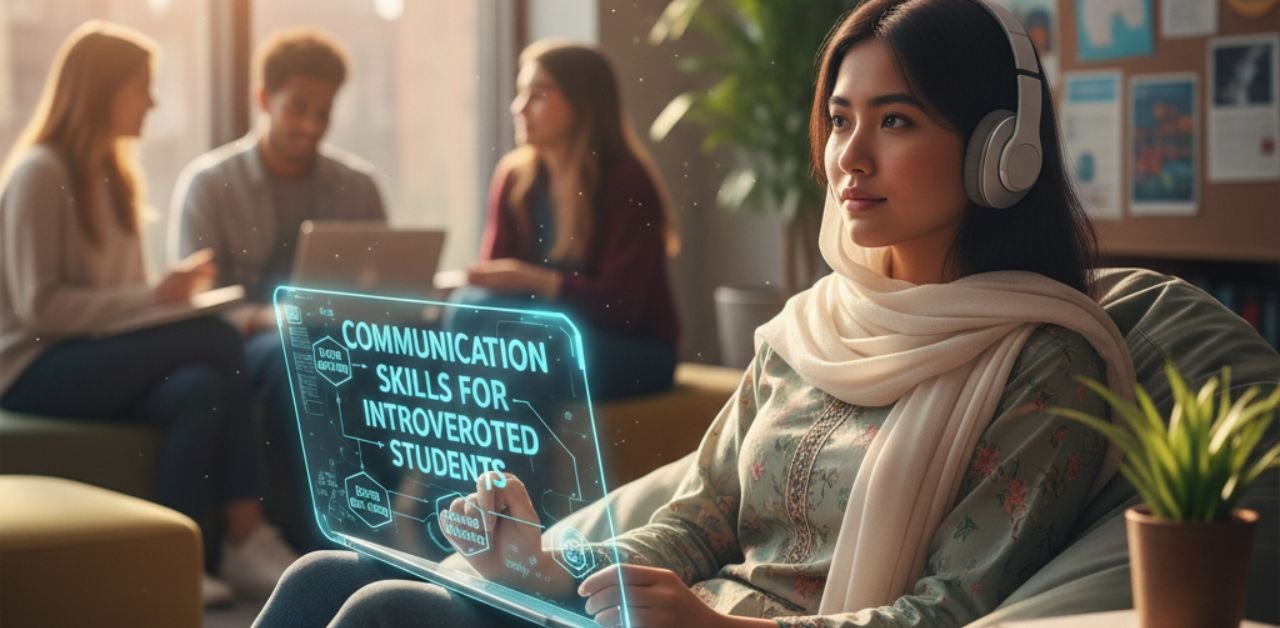
Do you ever feel like you have a world of brilliant ideas inside your head, but they seem to get stuck right at your teeth? If you find yourself staying quiet in class while others jump into the conversation, you are definitely not alone.
Many people think that being a good communicator means being the loudest person in the room. But here is a secret: some of the best communicators in the world are actually introverts. They aren’t loud, but they are thoughtful. They don’t just talk; they listen and then say something that actually matters.
The world is changing, and the way we talk to each other is changing too. With online learning and digital projects, being “quiet” is actually becoming a superpower. In this guide, we are going to show you how to turn your quiet nature into a tool for success. You don’t have to change who you are. You just need to learn the right communication skills for introverted students to let your inner light shine.
Communication strategies for introverted business professionals
Even though you are a student now, you are preparing for a future career. Many students worry that they won’t succeed in business because they aren’t “people persons.” However, introverts make incredible leaders because they lead with empathy and strategy.
One of the best strategies is the power of preparation. While an extrovert might “wing it,” an introvert can use their deep thinking skills to prepare talking points before a meeting starts. This takes the pressure off. When you know exactly what you want to say, the anxiety of speaking up starts to fade away.
Listening is another massive advantage. In the business world, people often talk over each other. An introverted professional who listens carefully can spot problems that others miss. When they finally do speak, their words carry more weight because everyone knows they have been paying attention.
Writing is also a key part of professional communication. Many introverts find it much easier to express complex ideas through email or detailed reports. In today’s digital world, being a great writer is just as important as being a great speaker. You can use your “quiet time” to craft perfect messages that influence your team.
Lastly, try “the one-on-one approach.” Introverts often struggle with large groups but excel in small settings. By building strong relationships with colleagues one person at a time, you create a support network. This makes it much easier to speak up when the whole group is together later on.
Communication classes for introverts
If you feel like your social battery drains quickly, you might think a communication class sounds like a nightmare. But specialized classes designed for introverts are actually very helpful. These classes don’t try to turn you into a loud extrovert. Instead, they teach you how to use your existing strengths.
Many of these classes focus on “active listening.” This is a skill where you learn how to show people you are listening without having to say a lot. It involves body language, eye contact, and asking the right questions. It’s a way to be part of the conversation without needing to be the center of attention.
Some classes also teach “Digital Communication.” Since so much of our world happens on screens, learning how to be clear and polite in forums and video calls is essential. These classes help introverted students practice their voice in a controlled environment.
Public speaking workshops for introverts are also great. They teach you that feeling nervous is normal. They show you how to use pauses to your advantage. A quiet pause in a speech can actually make the audience lean in and listen closer.
If you can’t find a local class, there are many online courses. These allow you to learn at your own pace from the comfort of your home. You can practice recording yourself and watching it back. This helps you see that you actually sound much more confident than you feel inside.
Social skills for introvert engineers
Engineering and technical fields are full of brilliant introverts. However, even the best engineer needs to be able to explain their ideas to others. If you can build a bridge but can’t explain why it’s safe, you might run into trouble.
For introvert engineers, “Technical Translation” is a vital skill. This means taking a very complex idea and explaining it in simple terms. You don’t need to be a storyteller; you just need to be clear. Using visuals like charts or diagrams can help do the talking for you.
Teamwork is also a big part of engineering. Instead of trying to lead the whole group, focus on being the “reliable expert.” When people know they can come to you for clear, honest answers, you build social respect without needing to be loud.
Try to practice “Small Talk for a Purpose.” You don’t have to talk about the weather if you hate it. Instead, ask your teammates about the project they are working on. Introverts usually enjoy deep topics more than small talk anyway.
Remember that social skills are like a muscle. The more you use them in small ways, the stronger they get. Even just saying “Good morning” to your lab partner every day is a step toward building the confidence you need for bigger interactions later.
Introvert communication problems
It is important to acknowledge that being an introvert comes with real challenges. One of the biggest problems is the “internal monologue.” Introverts often think so much about what they want to say that by the time they are ready to speak, the conversation has moved on.
Another issue is the fear of being judged. Many introverted students stay quiet because they don’t want to say the “wrong” thing. This can lead to teachers thinking you aren’t paying attention or that you don’t know the answer, even when you are the smartest person in the room.
Over-stimulation is a third common problem. Loud classrooms or busy hallways can be exhausting. When your brain is tired from all the noise, it becomes even harder to find the words you need. This is why many introverts feel “frozen” during group projects.
Finally, there is the “interrupting” problem. Introverts often wait for a polite gap in conversation to speak. In a loud group, that gap might never come. This can make you feel invisible or frustrated.
Recognizing these problems is the first step to fixing them. Once you know that your brain just processes information differently, you can stop blaming yourself. You aren’t “bad” at talking; you just have a different style that needs a bit of planning.
Presentation skills for introverts
Giving a presentation in front of the class is often the number one fear for introverted students. The good news is that a great presentation is 90% preparation and only 10% performance.
Start by mastering your topic. When you know your facts inside and out, you feel like an expert. This expert feeling acts like a shield against nervousness. If someone asks a question, you won’t panic because you genuinely know the answer.
Use your tools. A good slideshow is an introvert’s best friend. If the audience is looking at a beautiful picture or a clear graph on the screen, they aren’t staring directly at you. This takes a lot of the visual pressure off.
Practice “The Eye Contact Trick.” If looking people in the eye is too scary, look at their foreheads or the wall just above their heads. From the front of the room, it looks exactly the same to the audience.
Focus on your breathing. When we get nervous, we tend to talk faster and run out of breath. Take a deep breath before you start. Remind yourself that it is okay to slow down. If you lose your place, just take a sip of water. That five-second break feels like an hour to you, but to the audience, it just looks like you are being thoughtful.
6 skills for good communication
To be a truly great communicator, you don’t need a loud voice. You just need these six basic skills. These are easy to practice and will make a huge difference in your life.
1. Active Listening This means really hearing what the other person is saying instead of just waiting for your turn to talk. Nod your head and make small comments like “I see” or “That makes sense.”
2. Body Language You communicate a lot without saying a word. Standing up straight and keeping your arms uncrossed makes you look confident and open, even if you feel shy inside.
3. Clarity and Brevity Introverts are great at this! It means saying what you need to say in as few words as possible. People love it when someone gets straight to the point.
4. Empathy Try to understand how the other person is feeling. If a classmate is struggling, a simple “I know this is hard, but you’re doing great” can build a strong bond.
5. Asking Good Questions If you don’t know what to say, ask a question. People love talking about themselves or their opinions. It keeps the conversation going without you having to do all the work.
6. Written Communication Since we use text and email so much, being able to write clearly is a vital skill. Take a moment to check your spelling and make sure your tone sounds friendly before you hit send.
Conclusion
Developing communication skills for introverted students isn’t about changing who you are. It’s about finding the best way to share your unique perspective with the world. You have a quiet strength that is incredibly valuable in school, in business, and in life.
By using strategies like deep preparation, active listening, and digital tools, you can bridge the gap between your quiet inner world and the busy outer world. Remember, the world doesn’t just need people who talk. It needs people who think, people who listen, and people who care.
Start small. Try one new tip today. Maybe it’s asking one question in class or sending a thoughtful email to a teacher. Every small step builds your confidence. Before you know it, you won’t just be part of the conversation you’ll be leading it in your own quiet, powerful way.
Frequently Asked Questions
Can an introvert be a good leader?
Absolutely! Many of the world’s most famous leaders, like Bill Gates and Warren Buffett, are introverts. Introverted leaders are great because they listen to their team, think before they act, and stay calm under pressure.
How can I stop my voice from shaking when I speak in class?
A shaking voice usually comes from breathing too shallowly. Before you speak, take a deep breath into your belly. Also, try to speak slightly louder than you think you need to. Projecting your voice often helps it stay steady.
What if I don’t have anything to say in a group discussion?
You don’t always have to provide a new idea. You can contribute by sumarizing what others have said or by asking a clarifying question. For example, “So, are we saying that the main problem is the budget?” This shows you are engaged.
Is online learning better for introverts?
For many, yes! Online learning allows you to process information at your own speed. It gives you the chance to write down your thoughts in a forum rather than being put on the spot in a loud classroom. It’s a great place to practice being bold.
How do I handle “small talk” at school events?
Think of a few “go-to” questions before you go. Asking someone “What’s your favorite subject?” or “Have you started that big project yet?” is an easy way to start. Remember, most people are a little nervous too!