
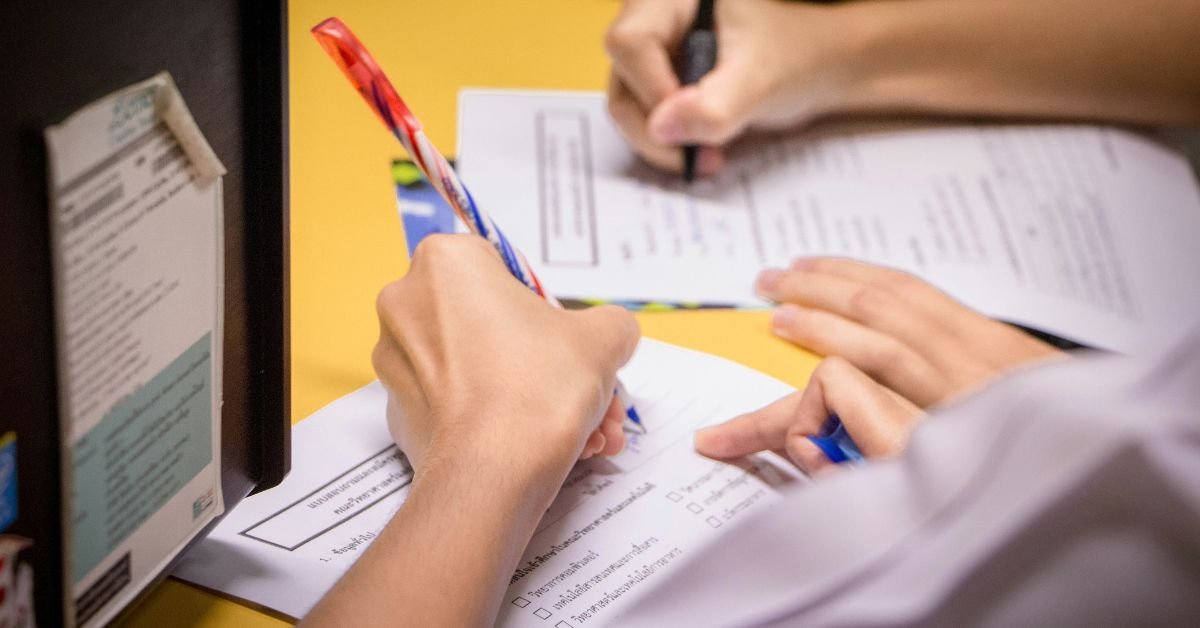
You studied everything. You knew all the answers. But when the exam ended, half your paper was still empty. Not because you forgot anything but because your hand was too slow. This happens to thousands of students every single year. The good news? Writing speed is not a talent. It is a skill. And every skill can be learned. This article will show you exactly how to write faster in exams step by step, with no confusing advice.
Summary
Want to write faster in exams right now? Do these 3 things:
- Hold your pen loosely a tight grip makes your hand tired very fast
- Move your whole arm when you write, not just your wrist this saves energy
- Think for 2 minutes before you write anything planned writing is always faster
Why Is Your Handwriting Slow? Find Your Real Problem First
Most students jump straight to “practice more.” But that does not always help if you do not know WHY you are slow. Check which problem fits you:
| Your Problem | How You Can Tell |
|---|---|
| Holding pen too tight | You see a mark (dent) on your finger after writing |
| Only moving your wrist | Your hand hurts after 30 minutes of writing |
| Writing and thinking at the same time | You keep stopping mid-sentence to think |
| Wrong pen | The pen feels scratchy or keeps skipping |
| Not writing by hand daily | You type everything and rarely pick up a pen |
Find your problem first. Then the tips below will actually work for you.
Fix How You Hold Your Pen
This is the number one complaint students share on Reddit and Quora: “My hand starts hurting one hour into the exam and I slow down.”
The reason is almost always the same holding the pen too tight.
When you squeeze your pen hard, your finger muscles get tired very quickly. You press too hard on the paper. The ink does not flow smoothly. Everything slows down.
The right way to hold a pen:
- Rest the pen between your index finger and thumb
- Let your middle finger support it from below
- Keep the pen at a 45-degree angle not straight up
- Do not press hard let the pen do the work on its own
Simple test: After writing, look at your index finger. If there is a red dent or mark where the pen rested, you are holding it too tight. Practice holding it lighter starting tomorrow.
Write With Your Arm, Not Just Your Wrist
This is something no competitor article talked about but it is one of the most powerful techniques.
Most students only move their wrist and fingers when they write. This is what makes your hand cramp up and slow down after a while.
The better way is to move your whole arm from the shoulder. Your wrist stays almost still. Your arm does the moving.
How to practice this:
- Hold a pen and write big letters in the air using your whole arm
- Your shoulder should be moving, not your wrist
- Now try the same on paper
- Keep your wrist relaxed and let your arm carry the motion
At first it will feel strange. After a few days, it will feel natural and your hand will stop hurting during long exams.
Choose the Right Pen
This tip was completely missing from both competitor articles even though it makes a huge difference.
The pen you use directly affects how fast you can write. Here is what to look for:
Tip size: Use a pen with a 0.5mm or 0.7mm tip. Too thick and every letter takes more effort to form.
Ink type: Gel pens and rollerball pens are much smoother than ballpoint pens. Smooth ink means less pressure needed, which means faster writing.
Weight: Pick a light pen. A heavy pen tires your hand faster.
Grip: A pen with a rubber grip section is better your fingers will not slip.
Good pens available in Pakistan: Pilot G2, Uniball Signo, Schneider Slider. All of these write smoothly and are easy to find.
One smart trick: Use an average pen during daily practice. On exam day, use your best, smoothest pen. The difference will surprise you.
Warm Up Your Hand Before the Exam
Athletes warm up before a race. Singers warm up before a performance. But students walk into an exam hall with cold, stiff hands and wonder why writing feels hard for the first 15 minutes.
Do this 5 minutes before your exam starts:
Wrist circles: Rotate both wrists 10 times clockwise, then 10 times the other way.
Finger stretch: Gently pull each finger back toward you, one at a time. Hold for 5 seconds each.
Fist squeeze: Make a tight fist, then open your hand fully. Do this 10 times.
Hand shake: Shake both hands loosely like you are shaking off water. Do this for 10 seconds.
Warm muscles work faster and more smoothly. This small routine takes 5 minutes but it helps your hand perform better right from the first page.
Think First, Write Second
This was the most shared insight from students on Quora: “My problem is not slow handwriting. My problem is that I think while I write.”
When you think and write at the same time, both slow down. Your brain cannot do two things efficiently at once.
If you struggle to focus while writing, read our guide on How to Concentrate on Studies
The fix is simple:
- Read the question
- Put your pen down
- Spend 2 minutes just thinking make a rough outline or quick bullet points on the side
- Then start writing in one smooth flow without stopping
This feels like it wastes time. It actually saves time. Students who plan for 2 minutes before writing always finish faster than students who start writing immediately and keep stopping to think.
Practice With Timed Drills
“Practice more” is advice that helps no one. Here is the specific way to practice that actually builds speed.
The sprint drill:
- Set a timer for 5 minutes
- Write about any topic just keep going without stopping
- Do not fix mistakes, do not think too hard, just write
- After the timer ends, count your words
- A good exam writing speed is 20 to 25 words per minute
4-week plan to build speed:
- Week 1: Three 5-minute writing sprints every day
- Week 2: Two 10-minute continuous writing sessions every day
- Week 3: Write one full exam answer in 20 minutes (like you are in a real exam)
- Week 4: Do a full practice exam sit for 1.5 hours and write like it is the real thing
Your hand muscles work exactly like any other muscle in your body. The more you train them the right way, the stronger and faster they get.
To fit this into your daily routine, see our Study Timetable for Weak Students
Tilt Your Paper
This is a small change that gives surprisingly good results.
Research shows that up-and-down movement is easier for your hand than side-to-side movement. When your paper is straight, you end up doing a lot of side-to-side motion. When you tilt it, your natural up-down movement takes over.
What to do:
- If you write with your right hand, tilt the paper clockwise at about 45 degrees
- If you write with your left hand, tilt it the other way
Your letters will naturally become slightly taller and thinner, your hand will move less, and your writing will get faster.
Left-handed students: You can also get smudge-proof ink pens (like Uniball) so wet ink does not smear as your hand moves across the page.
Write a Little Smaller
This sounds strange but it works.
Bigger letters need more movement to form. If you shrink your letter size by about 10 to 15 percent, each word takes less physical effort to write. Your writing will still be perfectly readable just slightly more compact.
Try it yourself: Write 10 lines at your normal size. Then write the same thing a little smaller. Time both. You will see the difference clearly.
Drink Water Before Your Exam
This tip was missing from every competitor article even though it is a real and common problem.
When your body is dehydrated, your muscles do not work as well. They cramp more easily and get tired faster. Many students get hand cramps in the middle of exams without realizing that dehydration is the reason.
Before any exam: Drink at least 500ml of water. If you are allowed a water bottle in the exam hall, keep it on the desk and sip throughout.
If your hand cramps during the exam:
- Put your pen down for 5 seconds
- Shake your hand loosely
- Take one slow deep breath stress makes cramps worse
- Rotate your wrist gently
- Then continue
For long-term prevention: Eat bananas, almonds, and green vegetables regularly. These foods are high in magnesium and potassium, which help prevent muscle cramps naturally.
For more student health advice, check our Healthy Tips for Students.
Create Your Own Short Forms
This is an advanced tip that serious exam students use.
For words you write very often in your subject, create your own short versions. For example:
- government → govt
- development → dev
- because → bc
- therefore → ∴
- Pakistan → Pak
- education → edu
- information → info
Important rule: Only use these short forms in your rough notes or bullet points never in your final answer paragraphs where the examiner reads.
Cursive or Print Which Is Faster?
Cursive writing is faster in theory because your pen stays on the paper longer between letters. But if you have never practiced cursive, do not switch to it two weeks before an exam. A new writing style will only confuse you and slow you down.
Simple rule:
- Already write in cursive? Keep doing it.
- Write in print? Stay with print.
The best middle option is semi-cursive: Connect only the letters that naturally flow together like “th”, “an”, “in” and keep the rest separate. This gives you speed without having to learn a completely new style.
The Emotional Side What Students Actually Feel
Speed is not only a physical problem. It is also an emotional one.
The feeling of “I knew everything but my paper was not finished” is one of the most frustrating things a student can experience. And that frustration builds anxiety. In the next exam, that anxiety makes you rush, your writing becomes messy, marks go down, and the cycle continues.
Here is what you need to understand: writing speed is a physical skill, not a sign of how smart you are. Any student who practices the right way for 3 to 4 weeks will see real improvement. That is not a motivational speech it is just how skill-building works.
If one exam did not go well because of slow writing, do not be hard on yourself. You had a skill gap. Skill gaps can be fixed. Start the drills above tomorrow and your next exam will be different.
Conclusion
Slow handwriting is not something you are born with. It is not a permanent problem. And it is definitely not a sign that you are a bad student. It is simply a skill that has not been trained yet.
Every tip in this article comes from a real root cause. A tight grip tires your fingers. Wrist-only movement burns out your hand fast. Writing and thinking at the same time slows both down. The wrong pen adds unnecessary friction. Dehydration causes cramps. These are not big problems. They are small, fixable habits.
You do not need to do all 11 tips at once. Start with these four today:
- Loosen your pen grip
- Move your arm, not just your wrist
- Tilt your paper 45 degrees
- Plan for 2 minutes before writing anything
Do these four things every single day for three weeks. Time yourself. Count your words. You will see the numbers go up not because of luck, but because you trained properly.
Exams test two things: what you know, and how well you can show what you know. You already work hard on the first part. Now start working on the second. Your next exam will be different.
Frequently Asked Questions (FAQs)
Q1: How long does it take to improve handwriting speed for exams?
Most students see a clear difference within 3 to 4 weeks of daily practice. You do not need hours every day. Even 20 minutes of focused timed writing practice is enough. The key is consistency doing it every day matters more than doing it for a long time once a week.
Q2: How many words per minute should I write in an exam?
A good target for exam writing is 20 to 25 words per minute. This means in a 1.5-hour exam, you can comfortably write around 1,800 to 2,250 words which is more than enough for most board and competitive exams. If you are currently writing less than 15 words per minute, the sprint drills in Tip 6 will help you reach the target in a few weeks.
Q3: Does cursive writing really help you write faster?
Cursive can be faster but only if you already write in cursive regularly. If you are used to print writing, switching to cursive two weeks before an exam will slow you down, not speed you up. The safest and fastest option for most students is semi-cursive — connecting only letters that flow naturally together, like “th”, “an”, and “in.”
Q4: My hand cramps during exams. What should I do right away?
Put your pen down for 5 seconds. Shake your hand loosely. Take one deep breath stress tightens muscles and makes cramps worse. Gently rotate your wrist a few times. Then continue writing. To prevent cramps from happening in the first place, drink water before your exam, do the 5-minute hand warm-up routine, and start holding your pen with less pressure from today.
Q5: Which pen is best for fast writing in exams in Pakistan?
The three best options easily available in Pakistan are the Pilot G2, Uniball Signo, and Schneider Slider. All three have smooth gel or rollerball ink that glides on paper without needing much pressure. Avoid thick ballpoint pens for exams they require more force and slow you down. A 0.5mm or 0.7mm tip size is ideal.
Q6: I write fast but my handwriting becomes very messy. What should I do?
This is a very common problem. The fix is not to slow down the fix is to reduce your letter size slightly. When letters are smaller, they are faster to form and often look neater at speed. Also, practice writing at medium speed with correct letter shapes every day. Over time, your hand will remember the shapes automatically and keep them neat even when you write fast.
Q7: Does typing on a phone or laptop affect handwriting speed?
Yes, it does. When you type all day and rarely write by hand, your writing muscles get weak and your muscle memory for letter shapes fades. This is a growing problem for students today. The solution is simple write by hand for at least 15 to 20 minutes every day, even if it is just a diary entry or notes from class. Daily hand writing keeps those muscles active and ready for exams.
Q8: How can I write faster without losing marks from bad handwriting?
Focus on letter consistency, not perfection. Your letters do not need to be beautiful they need to be recognizable. Keep letters a consistent size. Keep spacing between words even. Do not mix print and cursive styles in one answer. And remember: examiners read hundreds of papers. Clean, consistent, average-sized writing reads much faster than large, shaky, rushed writing and it makes a better impression.