
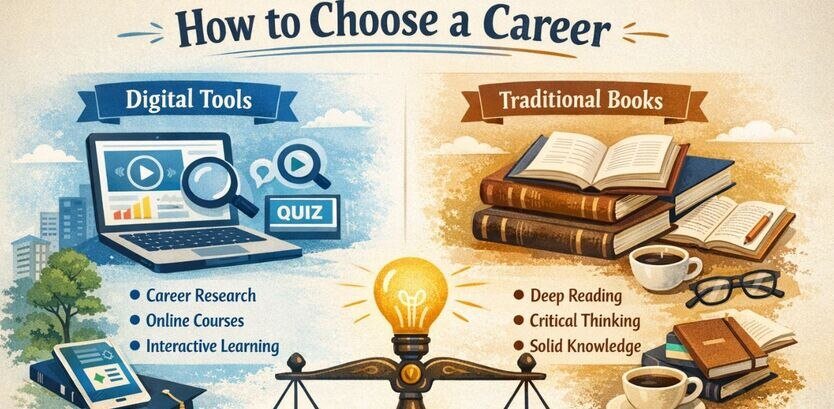
Choosing a career is one of the most significant decisions we make in life. Your next move can catapult your career or set you back. The path you take will not only shape your daily routines and financial well-being but also impact your overall happiness and sense of fulfillment.
How to choose a career for many, it’s a big, scary question.
Deciding on the right career path is arguably the most important choice you’ll make. It determines your future, fuels your personal growth, and has major effects on your long-term happiness.
With endless career options available today, making the right choice and finding your dream career can feel completely overwhelming. But don’t worry you are absolutely not alone! We’re here to guide you through a simple, step-by-step process.
We’ll break down the confusion and show you how to blend your interests with what the modern job market needs.
7 Simple Steps to Choosing Your Perfect Career

Choosing a career isn’t about finding a single “perfect job.” It’s about discovering a path that aligns with your unique combination of skills, interests, and core values. Here is a clear, actionable roadmap to help you clarify your future.
1. Look Inside: Self-Assessment is Your Starting Point
Before you can know where you’re going, you need to know where you are. This step is about honest self-reflection. Forget what your friends or family want for a moment what do you truly want?
- Your Interests and Passions: What topics do you love learning about? How do you enjoy spending your free time? Do you prefer working with people, data, objects, or ideas?
- Your Skills and Strengths: What are you naturally good at? What do people often compliment you on? This could be anything from great communication to solving complex math problems or being organized.
- Your Values: What matters most to you in life? Is it helping people (meaning), earning a high salary (financial security), having a flexible schedule (autonomy), or climbing the corporate ladder (advancement)? Your career must match your non-negotiable values.
- Your Motivations: Why do you want to work? Is it to create, to lead, to serve, or to learn? Knowing your “why” will keep you going when the work gets tough.
Practical Takeaway: Grab a notebook and create three columns: “I Enjoy,” “I Am Good At,” and “What I Value Most.” Write down at least five things in each.
2. Look Outward: Explore Sectors and Industries
Once you have a list of your inner traits, start exploring the outside world. Research different job sectors to see where your strengths might fit best.
- The Private Sector: These are businesses and corporations (like tech companies or retail stores) focused on growth and making a profit. They often offer higher earning potential and fast-paced environments.
- The Public Sector: These jobs are with local, state, or federal governments (like administration, defense, or policy-making). They typically offer great stability, good benefits, and a focus on public service.
- The Non-Profit/Third Sector: These organizations are dedicated to fulfilling a public need (like charities, NGOs, or foundations). They offer a strong sense of meaning and purpose, though salaries might be lower than in the private sector.
3. Bridge the Gap: Research Potential Career Ideas
Now, take your self-assessment notes and start searching for job titles that overlap.
If you enjoy helping people (value) and are good at science (skill), careers in healthcare or medical technology might appear on your list. If you love mental labor (interest) and value autonomy (motivation), software development or freelance writing could be a fit.
- Use Job Boards: Browse sites like LinkedIn and Indeed. Don’t apply yet just read the job descriptions. What are the key responsibilities? What skills do they require?
- Create a Shortlist: Aim for 5 to 10 careers that sound interesting. For each one, research the average career trajectory, the required education, and whether the field is growing or shrinking.
4. Try Before You Buy: Gain Real-World Insight
Reading about a job is totally different from doing it. Real-world experience is the most valuable research tool you have.
- Informational Interviews: This is crucial! Find someone who already does the job you are interested in (a relative, a friend of a friend, or a connection on LinkedIn) and ask them for 20 minutes of their time. Ask questions like: “What is your typical day like?” “What is the hardest part of your job?” and “What advice would you give to a beginner?”
- Internships and Volunteering: Even a short internship or volunteer role can give you a true taste of a work environment. It’s a low-risk way to explore an industry before committing to years of study.
- Online Courses (Low-Risk Exploration): Before enrolling in a four-year degree, take a short, specialized online course in a subject like Data Analytics or Graphic Design. This helps you figure out if you actually enjoy the daily work involved.
5. Get Objective Feedback: Use Aptitude Tests
While you shouldn’t rely solely on tests, career aptitude assessments can offer helpful, objective insights into your personality and how it matches different roles. (We discuss these in detail later!)
6. Make a Decision (and a Backup Plan)
Combine everything you’ve learned. Choose your top option and have one or two strong backups. Remember, this isn’t a life sentence! Most people change careers multiple times.
- List Pros and Cons: For your top choice, list every strength and weakness.
- Identify the Next Step: What is the very next thing you need to do? Enroll in a course? Get a specific certification? Apply for an entry-level job?
7. Set Achievable Goals
Structure your path into clear, manageable steps.
- Short-Term Goals (Next 6-12 Months): Finish that online course, update your resume, or complete an internship.
- Medium-Term Goals (Next 1-3 Years): Obtain your core degree or certification, land your first entry-level job, or achieve a specific salary benchmark.
- Long-Term Goals (Next 5+ Years): Reach a senior position, start your own business, or pivot to a new specialization.
How to choose a career path after 12th

The time right after high school (or 12th grade) is a pivotal moment. You are transitioning from general education to specialized study. Here is how to navigate this crucial decision point.
Know Your Streams and Their Destinations
In many educational systems, your choice of stream (Science, Commerce, or Arts/Humanities) after 10th or 12th grade dictates your initial career options.
- Science Stream (Pre-Medical/Pre-Engineering):
- Paths: Medicine (MBBS, BDS), Engineering (Civil, Electrical, Software), Pure Sciences (Physics, Chemistry), Pharmacy (Pharm D), Allied Health Sciences, and Computer Science.
- Tip: If you have strong logical reasoning and problem-solving skills, and enjoy deep analytical work, this path offers highly lucrative and respected professions.
- Commerce Stream (ICom/BCom):
- Paths: Chartered Accountancy (CA), Business Administration (BBA/MBA), Banking, Finance, Marketing, Economics, and Supply Chain Management.
- Tip: This is ideal if you are good with numbers, interested in the corporate world, and want versatile career options across various industries.
- Arts/Humanities Stream (FA):
- Paths: Law, Media Studies, Journalism, Psychology, Mass Communication, Education/Teaching, Public Administration (CSS), and Creative Arts.
- Tip: Choose this path if you excel in language, communication, critical thinking, and have a strong interest in societal issues, culture, or public service.
The Modern Alternative: Skill-Based Paths
Today, many students bypass traditional degree routes right after 12th to pursue high-demand, skill-based careers, often through short certifications and freelancing.
- Focus on Digital Skills: Web Development, Digital Marketing, Graphic Design, and UI/UX Design are all skills you can learn in 6-12 months and start earning from immediately, often leading to global work opportunities.
- Bridging the Gap: Consider a two-year associate degree or diploma in a technical field if you are eager to enter the workforce faster than a full four-year program allows.
Actionable Advice for Post-12th Students: Instead of asking, “Which degree is best?” ask, “What problem do I want to solve?” This shifts your focus from a title to a real career function.
Best career options for students in Pakistan
The job market in Pakistan is rapidly evolving, moving away from purely traditional roles toward technology, global connectivity, and specialized services. Here are some of the most high-growth, high-demand, and lucrative careers for students today.
The Digital and IT Revolution
This is, without a doubt, the fastest-growing sector, offering global income potential and high salaries.
- Software Engineering and Computer Science: The backbone of the modern world. Roles include web development, mobile application development, and software quality assurance. This field is highly in-demand globally, leading to significant freelance and international opportunities.
- Data Science and AI/Machine Learning: Data is the new gold. Professionals who can analyze large datasets and build intelligent systems (like AI models) are extremely valuable and command premium salaries.
- Cybersecurity Analyst: With increasing digital threats, every company (banks, telecom, government) needs experts to protect their data. This is a critical and highly secure career path.
- Digital Marketing and SEO: As businesses shift online, they need experts to help them reach customers. Roles in search engine optimization (SEO), social media management, and content creation are booming and are excellent choices for creative minds.
Traditional Pillars: Respected and Stable
These fields remain highly respected and financially rewarding, offering long-term stability.
- Medical and Healthcare: Doctors, Surgeons, Dentists, and Pharmacists remain core to the society. The demand for healthcare professionals is constant and the field offers high social status and job security.
- Engineering (Civil and Mechanical): With ongoing infrastructure and industrial projects, core engineering roles like Civil and Mechanical are essential for national development. Petroleum Engineering, in particular, often leads to some of the highest salaries in the sector.
Finance, Business, and Public Service
- Chartered Accountancy (CA) and Finance: CA is one of the most prestigious qualifications, leading to leadership roles in banking, auditing, and financial management. Finance professionals are key to economic stability.
- Business Administration (BBA/MBA): This degree provides a versatile foundation for corporate roles like HR Management, Business Analysis, and Marketing Management in large organizations.
- Civil Superior Services (CSS): Joining the bureaucracy through CSS or other government service exams is a highly sought-after career for its prestige and opportunity to work in public administration and policymaking.
A Note on Freelancing: Many students in Pakistan leverage their digital skills to work as freelancers on international platforms (like Upwork or Fiverr). This allows for rapid earning and skill growth, often bridging the gap between education and stable employment.
Career counselling tips for high school students
Choosing a career at 15 or 16 can feel impossible, especially with external pressures. Here are some tips to help you make informed decisions during your high school years.
1. Prioritize Exploration Over Perfection
At this stage, your goal is not to finalize your career, but to eliminate options.
- Be a Detective: If you think you like Law, read legal news and watch documentaries about court cases. If you like Engineering, try to understand how a bridge or building works. The more you explore, the clearer your true interest will become.
- Use Subject Performance as Clues: Don’t just look at your grades, look at the subjects you enjoy studying, even when the teacher isn’t great. If you love history, consider becoming a Public Administrator. If you find yourself enjoying biology, allied health sciences might be a good fit.
2. Manage Parental and Societal Expectations
It is common for parents to have specific career dreams for their children (often Medicine or Engineering). Your job is to communicate, not rebel.
- Show Your Research: Don’t just say, “I don’t want to be a doctor.” Instead, say, “I appreciate your advice, but my research shows that my love for computers and problem-solving is a better fit for a career in Cybersecurity, which is a high-demand, high-growth field.”
- Highlight Stability in New Fields: Educate your family on the stability and high-earning potential of new fields like Data Science, which may seem less familiar than traditional professions.
3. Focus on Skills, Not Just Knowledge
The knowledge you gain in school is important, but the skills you develop are vital for your career.
- Transferable Skills: These are abilities useful in any job. Focus on developing communication, teamwork, time management, and problem-solving skills. Join a debate club or manage a school event to practice these.
- Digital Literacy: Regardless of your career choice doctor, lawyer, or engineer you will need to be digitally literate. Learn how to use basic professional tools, spreadsheets, and presentation software effectively.
Actionable Advice: Every summer, try a “Career Challenge.” For one week, try to live like a professional in a field you are curious about. Watch industry lectures, read their core literature, and try to solve a basic problem they might face.
How to switch careers successfully
Career change is normal and often necessary. If you are already established in one field and are considering a jump, here is how to make the transition smoothly and confidently.
1. Identify Your Transferable Skills
The skills you learned in your old job are your greatest asset. Don’t think of yourself as starting from zero.
- Example: If you were a teacher, you have incredible communication, organization, and project management skills—all highly valued in roles like HR Training or Technical Writing.
- Make a List: Write down all the skills you used in your previous job and translate them into a language a new industry understands.
| Old Skill | New Industry Translation |
| Handled customer complaints | Conflict Resolution and Customer Relationship Management |
| Managed a team of 5 people | Team Leadership and Resource Allocation |
| Gave daily reports to manager | Data Presentation and Professional Communication |
2. Bridge the Skill Gap (Upskilling)
You don’t need another four-year degree to make a successful pivot. Modern career switches rely heavily on specialized, fast-paced learning.
- Micro-credentials and Certifications: Look for industry-recognized certifications (e.g., Google IT Support, PMP for Project Management, or specialized coding bootcamps). These signal to employers that you have the required modern skills.
- Low-Commitment Learning: Start with free or affordable online courses in your target field. This helps you confirm your interest before investing significant time or money.
- Shadowing and Volunteering: Offer to volunteer your time in your new industry. If you want to move into non-profit, volunteer for a local charity. This gives you practical experience and networking connections.
3. Network and Rebrand Your Story
The biggest mistake career changers make is applying for jobs using their old resume.
- Craft a Transition Narrative: Be ready to clearly and confidently explain why you are moving. Your story shouldn’t be about running away from your old job, but running towards a more fulfilling opportunity. (Example: “My 10 years in accounting gave me a strong analytical foundation, which I now want to apply to the creative and high-growth world of digital marketing.”)
- Networking is Key: Informational interviews are even more important now. Talk to people in your target field. They often know about jobs before they are publicly advertised and can vouch for your dedication to change.
Career aptitude test free online
Career aptitude tests are tools designed to help you understand your natural tendencies, work styles, and what environments you thrive in. They are great starting points, not final answers.
What These Tests Measure
Most reputable tests measure one of three things:
- Interests: What activities you find enjoyable (e.g., reading, fixing things, leading teams).
- Personality: Your natural traits (e.g., are you an introvert or an extrovert, do you prefer structure or flexibility).
- Values: What is important to you in a job (e.g., high salary, work-life balance, helping others).
Popular Types of Free Career Assessments
| Test Type | Focus | What it tells you |
| Holland Code (RIASEC) | Interests and Work Environment | Categorizes people into six personality types (Realistic, Investigative, Artistic, Social, Enterprising, Conventional) and suggests matching job environments. |
| Myers-Briggs Type Indicator (MBTI) (Informal versions) | Personality | Explores four key areas of your personality (e.g., how you make decisions, how you get energy) and links your type to compatible careers. |
| Values Assessment | Motivations | Helps you rank career motivators (e.g., helping society, creativity, stability) to ensure your job choice is fulfilling. |
How to Use the Results Wisely
The danger is taking the result literally. If a test says you should be a “Librarian,” but you hate quiet environments, don’t listen!
- Use it for Discovery: If the test suggests a career you’ve never heard of, research it! It might open up a new, exciting direction.
- Confirm Your Instincts: If the test aligns with an industry you were already thinking about (like recommending “Enterprising” careers if you were leaning toward management), it gives you an extra boost of confidence.
- Focus on the Core Traits: Instead of the job title, look at the core traits identified. If the test highlights your “Investigative” nature, search for jobs that require research, analysis, and problem-solving, not just the one job title they recommend.
High paying jobs without a degree
The belief that you must have a four-year university degree to earn a competitive, high salary is rapidly becoming outdated. In the modern, skill-based economy, experience, certifications, and high-demand specialized skills often matter more than a traditional degree.
Note: While we are avoiding pricing discussions, these roles are known globally and locally for their lucrative earning potential and high demand.
1. The Coding and Tech Specialist
If you have a strong logical mind and enjoy constant learning, this path offers global opportunities.
- Software Developer (Self-Taught): Many successful software developers, especially in specialized areas like front-end or mobile development, are self-taught or completed short, intensive bootcamps. Focus on mastering languages like Python, JavaScript, and SQL.
- Cybersecurity/Network Technician (Certified): You can enter this field with professional certifications like CompTIA Security+ or Certified Ethical Hacker (CEH). Companies prioritize the certificate and practical knowledge over a degree, as the threats change so fast.
2. The Digital Entrepreneur and Freelancer
These are highly flexible roles with unlimited earning potential, tied directly to your skills and ability to manage clients.
- Digital Marketing Specialist: You can start earning by mastering specific digital skills like SEO, running Google Ads campaigns, or Social Media Marketing. Businesses pay well for specialists who can directly increase their sales and visibility.
- UX/UI Designer: These professionals design how websites and apps look and feel. It’s a creative field that can be learned through courses and requires a strong portfolio, not a specific degree.
- High-End Content Writer/Copywriter: If you have exceptional command of language, you can earn a very high income writing specialized content for technical industries, corporate websites, or marketing campaigns.
3. Specialized Trades and Service Roles
These roles require a high level of technical mastery, typically gained through diplomas, apprenticeships, or vocational training.
- Renewable Energy Technician/Installer: As the world shifts towards sustainable power, technicians specializing in solar panel installation and maintenance, or wind energy systems, are becoming essential and highly paid.
- Project Manager: While a degree can help, the PMP (Project Management Professional) certification is often the gold standard. Excellent project managers are needed in every industry (construction, IT, healthcare) and their earnings reflect their critical role.
Key Insight: For high-paying jobs without a degree, the formula is simple: High Demand + Specialized Skill = High Income. If a skill is rare, difficult to learn, and solves a major business problem, its value will be high, regardless of your educational background.
Frequently Asked Questions (FAQs)
Is it okay to change my career after many years?
Absolutely! Career change is a normal part of modern professional life. The average person today changes careers (not just jobs) several times. Your experience in your previous field gives you unique insights and transferable skills that can be an advantage in a new industry. Don’t view it as starting over, but as pivoting with experience.
How do I choose between a safe career and a passionate one?
A smart approach is to find the overlap. You don’t have to choose one over the other. Use the “safe” career (which often means good pay and stability) to fund and support the “passionate” one (which might be a side hustle or volunteer work). Eventually, if your passion proves financially viable, you can make the full switch. Stability allows you to take creative risks.
What is the single most important skill to have for any career?
The single most important skill is adaptability and continuous learning. The job market changes so quickly that the ability to unlearn, learn new technologies, and apply old skills in new ways is what separates long-term success from stagnation. Focus on being a lifelong student.
How much importance should I give to my parents’ advice?
Your parents offer valuable advice based on experience and love. Listen to their concerns, especially about stability and financial security. However, your decision must be based on your unique interests and the current reality of the job market, which has changed since they were young. Use their wisdom, but make your own informed decision after thorough research.
Conclusion: The Journey of Self-Discovery
Choosing a career is not a single event; it is a journey of continuous self-discovery and exploration. It’s a dynamic process where you, the world, and the job market are all constantly changing.
The secret to career happiness is not finding the one job that completes you, but building a life where your daily work is closely aligned with the things you value, the skills you enjoy using, and the life you want to live.
By following these steps starting with honest self-reflection, actively exploring diverse options, and committing to lifelong learning you can move forward with clarity. Whether you are a high school student in Pakistan deciding your stream or an experienced professional seeking a pivot, take a deep breath. The power to choose a fulfilling and successful path is already within you. Start researching today, and embrace the exciting journey ahead!