
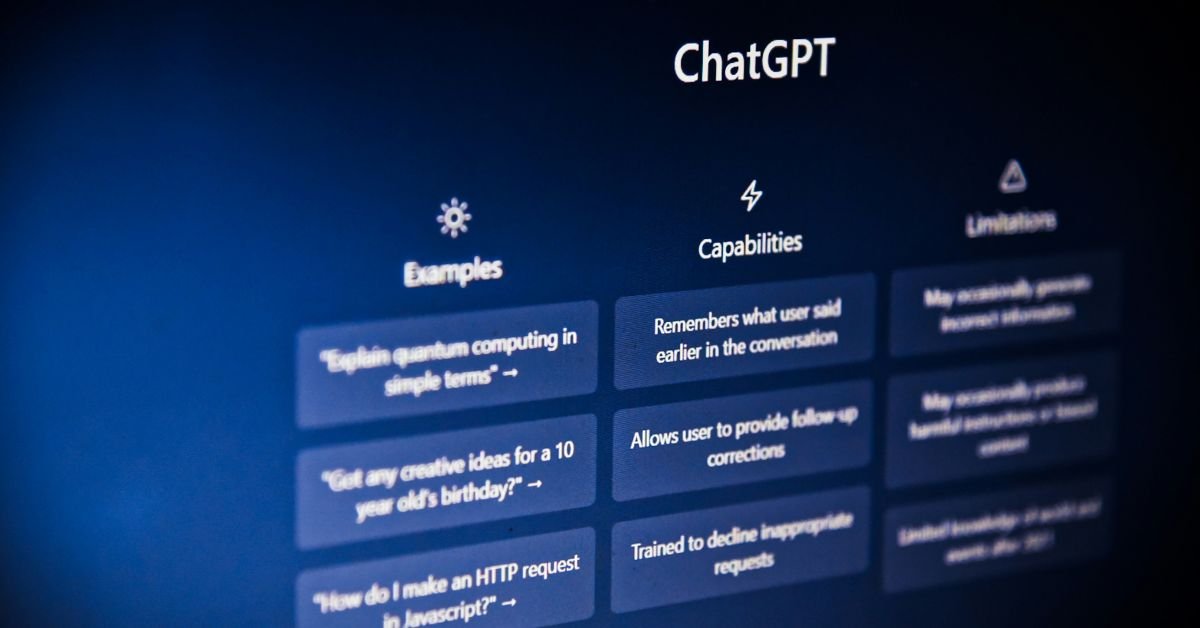
You open ChatGPT. You type “explain photosynthesis.” ChatGPT gives you three paragraphs. You read them. You close the tab. Two hours later you remember nothing.
Sound familiar?
This happens to most students. Not because ChatGPT is bad. But because the prompt was bad.
The difference between a student who studies for 6 hours and forgets everything, and a student who studies for 2 hours and actually remembers is not intelligence. It is the quality of the questions they ask.
This article gives you the best ChatGPT prompts for students to study faster. Not the basic ones you already know, like “summarize this chapter.” These are specific prompts that target the real reasons students struggle confusion, forgetting, fear of exams, and wasted time.
If you use even five of these prompts this week, your study sessions will feel completely different.
Quick Summary
Most students spend hours studying but their brain does not hold the information. They re-read notes, highlight everything, and still blank out during tests. This happens because passive studying reading, highlighting, re-watching videos does not build memory. Your brain only stores what it has to work for.
The prompts in this article force ChatGPT to teach you in ways that make your brain actually work. Through questions, stories, comparisons, challenges, and practice. That is how real learning happens. These prompts are for school students, college students, exam preppers, and anyone who feels like they study hard but do not see results.
Why Most Students Use ChatGPT the Wrong Way
Most articles about ChatGPT prompts for students give you the same ten ideas make a study plan, create flashcards, summarize a chapter. Those are fine. But they are passive.
When you ask ChatGPT to summarize something, ChatGPT does the thinking. Not you.
Real learning happens when you do the thinking. The best prompts flip the situation. They make ChatGPT ask you questions, challenge you, and catch your mistakes. That is the gap most students miss, and that is what this article covers.
Most prompts online are also too vague. “Explain this topic” gets you a wall of text. You need prompts that give ChatGPT a clear role, a clear format, and a clear goal. That is exactly what every prompt in this list does.
The 15 Best ChatGPT Prompts for Students to Study Faster
Prompt 1 The Three-Level Explanation
Most students ask: “Explain mitosis.” That gets a textbook answer. Use this instead:
“Explain [topic] to me in three ways: first, as if I am 10 years old using a simple story. Second, using a real-world example I can see in daily life. Third, in one sentence that I can say out loud during an exam. Topic: [write your topic here].”
This works because your brain connects new information to things it already knows. Three different angles mean three different memory hooks. If one explanation does not click, another one will.
Prompt 2 The What Confuses Students Most Prompt
This is one that most students never think of:
“I am studying [topic]. What are the three things that confuse students the most about this? Explain why students get confused and then give me the correct way to think about each one.”
This works because you learn what traps to avoid before you fall into them. Most study materials tell you what is right. This prompt also tells you what is wrong which is how mistakes get prevented before the exam.
Prompt 3 The Analogy Builder
“I do not understand [concept]. Create an analogy that compares it to something a student sees in everyday life like food, sports, social media, or school. Make it so clear that I could explain it to my younger sibling in under one minute.”
Analogies are one of the fastest ways the brain absorbs difficult ideas. This prompt works especially well for science, economics, and math concepts that feel too abstract to understand from a textbook alone.
Prompt 4 The Teach-Back Challenge
This is the most powerful prompt on this entire list. Almost no article mentions it.
“I am going to teach you [topic] in my own words. You will act like a student who knows nothing about this subject. After I explain it, ask me three questions that will show whether I really understood it not just memorized it. If my explanation has any mistakes, point them out kindly. Ready?”
After typing this, you explain the topic in your own words.
This is the Feynman Technique in action. When you teach something, your brain figures out every gap in your understanding instantly. Most students never find their weak spots until the actual exam. This prompt finds them for you first, when you still have time to fix them.
Prompt 5 The Memory Hook Creator
“Create a funny, weird, or shocking mnemonic to help me remember the following list: [paste your list — could be formulas, dates, steps, or terms]. The more unusual the mnemonic, the better. Also explain why each part of the trick connects to the actual information.”
Your brain is bad at remembering boring lists. It is very good at remembering things that are surprising or funny. This prompt turns dry content into something your brain actually holds onto. It works great for history dates, biology classifications, chemistry rules, and law definitions.
Prompt 6 The Pre-Study Primer
Most students open a chapter cold. This prompt warms your brain up before you read, like stretching before a run. This is something most study articles completely skip.
“I am about to study [chapter or topic] from [subject]. Before I start reading, give me: the three most important questions this chapter will answer, two things I should already know before reading, and one real-world situation where this topic matters. Keep it short.”
When your brain knows why it is reading something and what to look for, it pays attention differently. You stop reading passively and start reading like a detective. Retention goes up sharply.
Prompt 7 The Exam Simulation Prompt
“Act as a strict exam paper setter for [subject] at [grade or level]. Create 10 questions based on [topic] mix short answers, multiple choice, and one long question. Do not give me the answers yet. Give me the answers only after I have attempted all the questions. Make the questions similar to what actually appears in real exams.”
The key detail here is “do not give answers yet.” This forces your brain into retrieval mode. Practice under exam conditions is the single closest thing to a shortcut in studying because it trains your brain to recall not just recognize information.
Prompt 8 The Mistake Analyzer
After you attempt a practice test or past paper, use this prompt. It is one that most study articles consistently miss.
“Here are the questions I got wrong in my practice test: [paste questions and your wrong answers]. For each one, tell me: why my answer was wrong, what concept I clearly have not understood, and one specific thing I should review to fix this gap. Do not just give me the right answer help me understand the thinking mistake I made.”
Getting a wrong answer is not useful information on its own. Understanding why you got it wrong is the actual lesson. This prompt turns every mistake into a targeted study session. Most students just check the answer key and move on. That is why they make the same mistakes again.
Prompt 9 The High-Value Topic Filter
“I have [X days] before my [subject] exam. The full syllabus is: [paste topics]. Based on what typically appears in exams for this subject, rank these topics from highest priority to lowest. Tell me how many hours to spend on each topic. I can study [X hours] per day.”
Students often study the wrong things with too much time. This prompt applies the 80/20 rule 20% of topics usually make up 80% of exam marks. It helps you spend your limited time where it counts most.
Prompt 10 The Argument Builder for Essays
“I have to write an essay on [topic]. Do not write it for me. Instead: help me build 3 strong arguments with one piece of evidence for each, tell me one strong counter-argument I should address, and suggest an opening line that is interesting — not a question or a definition. I will write the essay myself.”
This prompt keeps you in control. ChatGPT becomes a thinking partner, not a ghostwriter. You build your own essay, which means you actually understand what you wrote and you can defend it if your teacher asks questions.
Prompt 11 The Paragraph Checker
“Here is a paragraph I wrote: [paste paragraph]. Do not rewrite it completely. Just tell me: is my main point clear, does my evidence support the point, and what is one sentence I should change and why. Keep your feedback short and direct.”
This forces targeted feedback on specific problems while keeping your own voice in the writing. Most students either want ChatGPT to fix everything which means they learn nothing or they ask something too vague like “is this good?” Neither approach builds actual writing skill.
Prompt 12 The Overwhelm Breaker
This is rarely mentioned in study guides but every student needs it at some point.
“I feel completely overwhelmed by [subject or topic]. I do not know where to start. Break this entire topic into the smallest possible pieces like a beginner’s checklist. Start from step one, something so simple even a child could do it, and build up from there. I want to feel like I can handle this.”
Overwhelm is not a knowledge problem it is a framing problem. When a topic feels too big, the brain shuts down. Breaking it into tiny, doable pieces removes that mental block. This prompt rebuilds your confidence before your brain will even attempt to learn.
Prompt 13 The Real Life Connection
“Take the concept of [topic] and connect it to something that actually happens in the real world today something a teenager would find interesting or relevant. Then explain why understanding this concept helps in real life, not just in exams.”
Your brain stores information in context. When something feels meaningful and connected to real life, it becomes much easier to recall later. Subjects like history, economics, chemistry, and physics become genuinely interesting when you see why they actually matter outside of a textbook.
Prompt 14 The Debate Partner Prompt
“I think I understand [topic or concept]. Take the opposite position and argue against what I believe. Challenge my understanding. I will defend my position. After we go back and forth three times, tell me which parts of my understanding were weak.”
Understanding only one side of a topic is surface-level knowledge. When you defend a position under pressure, your brain locks the information in deeply. This is especially powerful for humanities, law, economics, and science debate topics.
Prompt 15 The Spaced Repetition Scheduler
“I studied these topics today: [list topics]. Create a review schedule for the next 14 days using spaced repetition. Tell me exactly which topic to review on which day, and how long to spend on each review session. I can study for [X hours] per day. The goal is long-term memory, not just short-term cramming.”
Spaced repetition is one of the most research-backed memory techniques available. Reviewing at increasing intervals — Day 1, Day 3, Day 7, Day 14 signals to your brain that this information is worth keeping. Most students review once and forget. This prompt builds a proper system that makes forgetting much harder.
One Rule That Makes Every Prompt Work Better
Always give ChatGPT your context. Do not just say “explain photosynthesis.” Say: “I am a 9th grade student preparing for my biology board exam in 3 weeks. Explain photosynthesis to me.”
The more ChatGPT knows about who you are, what level you are at, and what your goal is the better the answer it gives. Think of it like talking to a tutor. A good tutor asks about your background before teaching. You can give that information upfront and get better results from the very first message.
Conclusion
You do not need to use all 15 prompts at once. Pick two or three that match what you are struggling with right now.
If you are confused about a topic, start with Prompt 1 or Prompt 3. If you keep forgetting what you study, use Prompt 4 or Prompt 5. If exams make you nervous, use Prompt 7 or Prompt 8. If you feel overwhelmed and do not know where to start, use Prompt 12.
Students who study faster are not smarter. They ask better questions. ChatGPT can act as a tutor, a quiz master, a memory coach, and a writing partner but only as well as the instructions you give it. The prompts in this article are those instructions.
Start with one prompt today. Just one. See what changes.
Frequently Asked Questions
Is using ChatGPT for studying considered cheating?
No as long as you are using it to understand, not to copy. If you ask ChatGPT to explain a concept, quiz you, or help you think through an essay, that is learning. If you copy a ChatGPT-written answer and submit it as your own work, that is cheating. The difference is whether you are doing the thinking or not.
Which ChatGPT prompt works best for memorizing fast before an exam?
Prompt 5 the Memory Hook Creator and Prompt 15 the Spaced Repetition Scheduler work best for fast memorization. Prompt 5 creates mnemonics that stick. Prompt 15 builds a review plan so information does not disappear after one night of studying.
Can these prompts work on the free version of ChatGPT?
Yes. Every prompt in this article works on ChatGPT’s free version. You do not need a paid subscription to use any of them.
How do I use ChatGPT to study for math faster?
Use Prompt 8 the Mistake Analyzer after doing practice problems. Also try this math-specific version: “Solve [problem] step by step. After each step, explain what rule or formula you used and what mistake a student usually makes at that step.” This teaches you both the method and the common errors at the same time.
How many prompts should I use per study session?
One or two per session is enough. Pick prompts based on your goal for that session. If your goal is to understand a new topic, use Prompts 1, 2, or 3. If your goal is to test yourself, use Prompts 4 or 7. Using too many at once splits your focus and slows you down.
Do these ChatGPT study prompts work for all subjects?
Most of them do. Prompts 1, 4, 5, 12, and 13 work for almost any subject. Prompts 7 and 8 are especially strong for subjects with clear right or wrong answers like math, science, and history. Prompts 10 and 11 are best for subjects that involve writing, like English, social studies, and business studies.