
Choosing a career path is one of the most important and exciting decisions of your life. It’s a huge step that moves you from the classroom to the real world, and honestly, it can feel a little overwhelming. With the job market changing faster than ever, driven by new technologies and global shifts, the old-school approach of “just pick a degree” simply doesn’t work anymore.
Today, career guidance for students is about much more than a list of safe jobs. It’s about self-discovery, strategy, and preparation.
It’s about understanding your unique strengths, exploring real and dynamic career options, and equipping yourself with the right skills for a future job market that is constantly evolving.
Think of it like planning a major trip. You wouldn’t just pick a random destination; you’d research the best routes, pack the right gear, and map out the journey. Your career is the same!
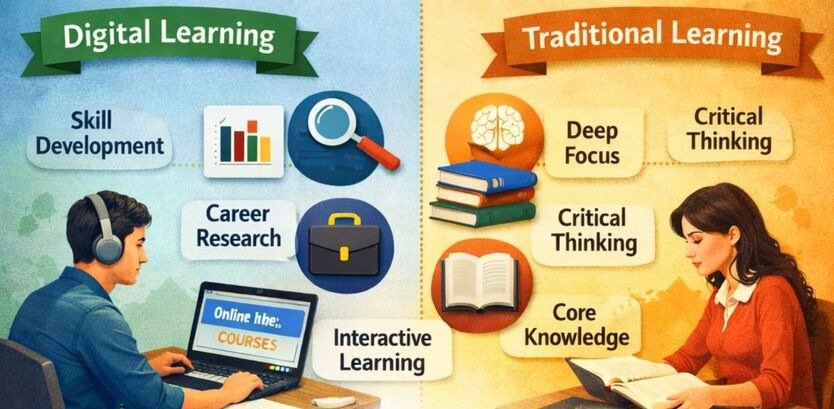
This comprehensive guide is your roadmap. We’ll dive into practical, actionable advice, exploring everything from the best streams after high school to the essential soft skills employers are looking for right now. By balancing self-reflection with practical knowledge the digital tools for quick insight and the traditional learning for depth you will gain the clarity and confidence needed to make a choice that leads to long-term growth and satisfaction.
Let’s start building your future today.
Best Career Options After 12th Commerce Stream
The Commerce stream is incredibly versatile. It equips students with strong foundational skills in finance, accounting, and business, which are the backbone of every industry. The world of business is wide open, offering diverse and financially rewarding paths.
Here are some of the most sought-after career options after 12th Commerce, broken down by whether or not you studied Mathematics.
Commerce With Mathematics
If you have a knack for numbers and enjoy complex problem-solving, your options are especially strong in finance and data.
- Chartered Accountant (CA): This is one of the most prestigious and challenging paths. CAs handle auditing, taxation, financial management, and accounting. It requires dedication but offers immense financial rewards and respect.
- Investment Banking: This high-pressure, high-reward field involves helping corporations raise capital (through IPOs or bond issuance) and advising on mergers and acquisitions. It requires sharp analytical skills and a solid understanding of financial markets.
- Data Analytics/Science: Every company needs to analyze its financial and customer data to make better decisions. As a Commerce student with Maths, you are well-positioned for an entry-level Data Analyst role, leveraging your business knowledge with statistical skills.
- Financial Analyst/Manager: Professionals in this role analyze market trends, financial statements, and economic reports to guide business investment decisions. A Bachelor of Commerce (B.Com) or Bachelor of Business Administration (BBA) followed by a specialized course like a CFA (Chartered Financial Analyst) is a common path.
Commerce Without Mathematics
Don’t worry if you didn’t take Maths or prefer less quantitative roles. The Commerce stream still opens doors to high-growth areas in management, law, and digital industries.
- Bachelor of Business Administration (BBA): A BBA is the perfect gateway to a career in management. It covers foundational topics like Marketing, Human Resources, Finance, and Operations, preparing you for managerial roles in almost any sector.
- Digital Marketing: All businesses need an online presence. Digital marketing involves promoting products and services through search engines (SEO), social media, and online advertising. This is a creative and fast-paced field that is constantly in demand.
- Corporate Law (5-Year Integrated LLB): If you enjoy logic, debate, and reading, a career in law is excellent. Corporate lawyers help companies comply with legal and regulatory requirements, manage contracts, and handle legal affairs.
- Company Secretary (CS): A Company Secretary is an expert in corporate laws, securities, and compliance. They ensure a company runs legally and ethically, making this a highly specialized and respected role.
- Hotel Management (BHM): For those interested in hospitality, tourism, and customer service, a BHM degree can lead to careers in top hotels, resorts, cruise lines, and event management companies.
Practical Takeaway: Before committing to any course, research the specific syllabus. A B.Com in Accounting and Finance, for example, will prepare you differently than a BBA in Marketing. Look for courses that include real-world projects, internships, and industry certifications.
How to Choose a Career Path After High School
The period after high school can feel like standing at a crossroads. The best way to move forward is not to panic, but to follow a structured, step-by-step process of self-discovery and exploration.
Here is a practical, 7-step process to help you choose a career path with clarity.
1. Discover Your Inner Compass: Interests and Strengths
The most fulfilling careers align with what you love and what you’re naturally good at.
- List Your Interests: What subjects do you enjoy studying? What activities make you lose track of time (e.g., writing, debating, fixing things, organizing events)?
- Identify Your Strengths: Where do you consistently excel? This isn’t just about grades. Are you a great communicator? A strong leader? Do you have attention to detail? Ask teachers, friends, and family for their honest opinions they often see strengths you miss.
- Use Career Aptitude Tests: A great starting point for objective self-assessment. These tests compare your profile (personality, interest, and aptitude) to thousands of careers. (We cover some free options later in the post!)
2. Explore the Real World of Work
Once you have a general idea, you need to look beyond the titles and understand what the actual job is like.
- Research Job Descriptions: Search for entry-level positions in your fields of interest. Read the “Responsibilities” and “Required Skills” sections carefully. Does the day-to-day work sound exciting or draining?
- Informational Interviews: Reach out to professionals on LinkedIn who work in your dream fields. Most people are happy to spare 15 minutes for a student. Ask questions like: “What is the best part of your job?” and “What is the biggest challenge?”
- Job Shadowing and Internships: Nothing beats first-hand experience. Look for short-term internships, volunteer roles, or job shadowing opportunities, even during summer breaks. Internships are like a trial run for a career they let you “taste” the field before committing fully.
3. Evaluate Your Academic Fit and Required Education
Now, you need to connect your ideal career to an educational plan.
- Research Educational Pathways: What is the standard path? Does the career require a four-year university degree, a specialized vocational course, or an apprenticeship?
- Consider a Balanced Approach: Digital learning offers incredible speed and flexibility (like online certifications in data science or digital marketing). Traditional education provides a deep, foundational understanding and critical thinking skills. A degree coupled with specific, in-demand online certifications is often the most powerful combination.
- Look Beyond University: For some high-demand technical trades (plumbing, electrical, coding), vocational training or trade school may be a faster, more cost-effective route to a high-paying job.
4. Evaluate Future Trends and Job Outlook
You want a career that will still be thriving 10 or 20 years from now.
- Analyze Industry Growth: Is the field growing, stagnant, or declining? Focus on future-proof sectors like technology, healthcare, renewable energy, and data.
- See the Impact of Automation: Will AI or automation replace the core tasks of this job? Careers that require high-level creativity, critical thinking, emotional intelligence, and complex problem-solving are generally safer.
5. Consider the Financial and Practical Realities
While passion is key, you must also be practical.
- Financial Investment: Research the cost of the required education (university fees, certifications, etc.).
- Work-Life Balance: Does the typical workload and environment (e.g., travel, remote work, long hours) fit the lifestyle you want?
- Career Growth: Are there clear paths for advancement and higher earnings within the field, or is it a dead end?
6. Make a Decision and Create SMART Goals
Once you’ve weighed all the factors, it’s time to choose your initial path.
- Set SMART Goals: Make your goals Specific, Measurable, Achievable, Relevant, and Time-bound. For example: “I will enroll in the BBA program by June 2026, and complete a digital marketing certification by December 2026.”
- Plan for Flexibility: Remember, your first career choice is not your final one. Be open to changing majors or industries as you gain real-world experience and your interests evolve.
7. Seek Expert Guidance
Don’t do this alone.
- Talk to a Career Counselor: Professional counselors use structured tools and their expertise to help you sort through your options.
- Consult Teachers and Mentors: Leverage the experience of the adults in your life.
Practical Takeaway: Start with a list of dislikes first. Eliminating careers that go against your core interests (e.g., I hate sitting at a desk, I dislike sales) is often easier than picking a single, perfect one.
High-Paying Jobs for Fresh Graduates Without Experience
It’s a common challenge: most high-paying jobs ask for experience, but how do you get experience without a job? The secret is to understand that relevant skills and a strong portfolio often count as experience.
In today’s market, many companies are focused on hiring for potential and upskilling internally, especially in high-growth fields.
Here are some high-potential career paths that often offer competitive starting salaries to fresh graduates who have focused on building a strong skillset, portfolio, or relevant certifications during their studies.
1. Technology & Data Roles
The tech sector is the engine of the modern economy, and many entry-level roles have excellent earning potential.
- Software Engineer / Web Developer (Entry-Level): Companies constantly need people to build and maintain their websites and applications. If you have a degree in Computer Science or a robust portfolio of personal coding projects (a GitHub profile is essential), you can secure a great starting role.
- Focus on: Python, JavaScript, HTML/CSS, and modern frameworks (like React or Angular).
- Data Analyst: Businesses rely on data to make decisions. Graduates who are proficient in tools like Excel, SQL, and a visualization tool (like Tableau or Power BI) can start in lucrative analyst roles, translating data into actionable business insights.
- Focus on: Analytical skills, statistical basics, and excellent communication to explain data.
- Cybersecurity Analyst (Junior): With the rise of digital attacks, cybersecurity is a massive field. While this role often requires specialized training, a relevant degree plus a certification (like CompTIA Security+) can open the door to a high-demand, high-paying junior position.
2. Digital Economy Roles
These roles rely heavily on soft skills and an understanding of online platforms, making them accessible to digitally-savvy graduates.
- Digital Marketing Specialist: This encompasses various roles like SEO Analyst, Social Media Manager, or Paid Ads Specialist. If you ran a successful social media account, built a blog that generates traffic, or completed Google’s free digital marketing certifications, you have a portfolio that beats a lack of traditional experience.
- Focus on: SEO, Content Creation, Analytics, and a demonstrable history of online work.
- Technical Content Writer/Copywriter: Companies need clear, compelling content. If you excel at writing and can explain complex topics simply, you can start as a freelance writer for blogs, websites, or marketing materials. A strong portfolio of published articles is your main credential.
- Focus on: Grammar, research skills, and understanding the target audience (often learned through personal blogging or coursework).
- Virtual Assistant (Specialized): While generic VA jobs exist, specialized VAs like those managing high-level professional’s social media, bookkeeping, or running their e-commerce store can command a premium rate. Your organization and tech-savviness are your key assets.
3. Business & Consulting Roles
These roles value communication, problem-solving, and a proactive attitude.
- Junior Sales Representative: Many high-paying corporate roles start in sales. This is a commission-based field where your performance directly dictates your earnings. Companies often hire fresh graduates for their energy, willingness to learn, and strong interpersonal skills.
- Focus on: Communication, negotiation, and resilience.
- Project Coordinator/Junior Project Manager: If you’re highly organized and a great leader, you can enter project management. These roles support a Project Manager, helping to track tasks, manage timelines, and coordinate teams. Internships where you managed a project (even a non-work one, like a college festival) are key.
- Focus on: Time management, leadership, and organization skills.
- Human Resources Coordinator: HR professionals manage a company’s most important asset its people. Strong communicators with excellent organizational skills can start in entry-level HR roles, handling recruitment, employee onboarding, and administrative tasks.
Practical Takeaway: You don’t get paid for experience; you get paid for value. To land a high-paying job without experience, focus on proving your value through a portfolio of relevant personal projects, certifications, and measurable achievements (e.g., “Grew a social media following by 50% in three months”).
Future Career Trends for Students
The world of work is being reshaped by four major forces: automation, data, connectivity, and sustainability. As a student planning your career, it’s crucial to look ahead at the fields that are on an upward curve.
Focusing on these future-ready sectors will give you a significant advantage and ensure long-term job stability.
1. Artificial Intelligence (AI) and Machine Learning (ML)
AI is no longer a futuristic concept it’s here. Almost every industry is looking for ways to use AI to improve efficiency and decision-making.
- AI Prompt Engineer: One of the newest and fastest-growing roles. It involves designing and refining the text inputs (prompts) to get the best, most accurate, and most useful output from generative AI models like ChatGPT. It combines technical understanding with creative thinking.
- Machine Learning Engineer: These professionals design, build, and deploy the AI models that learn from data. This is a highly technical field but is one of the most lucrative and in-demand.
- AI Ethics and Governance Specialist: As AI becomes more powerful, there is a growing need for people to ensure it is used fairly and ethically. This role combines technical knowledge with a background in law, philosophy, or social science.
2. Sustainability and Green Energy
With global focus on climate change, careers centered on sustainability are booming.
- Renewable Energy Engineer: Designing and building solar, wind, and geothermal power systems. This requires a strong background in engineering.
- ESG (Environmental, Social, and Governance) Specialist: Businesses now have legal and ethical requirements to operate sustainably. ESG specialists help companies meet these standards, measuring their environmental impact and social responsibility. This is a great area for those with a business or environmental science background.
- Urban Planner/Sustainable Architect: Designing cities, homes, and public spaces to be energy-efficient, reduce waste, and promote green living.
3. Digital Health and Telemedicine
The combination of healthcare and technology is creating a wave of new opportunities.
- Health Informatics Specialist: These professionals manage and analyze large sets of patient data (electronic health records). They ensure data is secure and used effectively to improve patient care and hospital efficiency.
- Telemedicine Coordinator: Managing the technology and logistics for remote doctor-patient consultations, ensuring a smooth digital experience.
- Biotechnology Researcher: Working on drug discovery, personalized medicine, and genetic research, often requiring advanced science degrees.
4. Human-Centric Roles (Automation-Proof)
As machines handle more routine tasks, careers that require distinctly human traits will become more valuable.
- Creative Professionals (UX/UI Designer, Storyteller, Artist): Creativity is hard to automate. Roles centered on human experience, aesthetics, and brand storytelling will always be necessary. UX (User Experience) and UI (User Interface) designers, in particular, ensure that technology is easy and enjoyable for people to use.
- Emotional Intelligence Roles (Psychologist, Counselor, Coach): Automation cannot replace deep human connection, empathy, and specialized guidance in mental well-being or personal development.
- Complex Problem-Solvers (Strategy Consultant): Roles that involve solving unique, ambiguous, and high-level business problems will always require the nuanced thinking of a human.
Practical Takeaway: Regardless of your chosen path, aim to become fluent in two major areas: your core discipline (e.g., Marketing, Accounting, Nursing) and Data/Tech Fluency. Even if you are a marketing manager, knowing how to analyze website traffic (data) and use an AI tool for brainstorming (tech) will make you irreplaceable.
Free Online Career Aptitude Test for Students
A good career test is an invaluable starting point. It provides an objective look at your personality, interests, and inherent abilities, matching them against potential careers. Remember, these tests offer suggestions, not final answers treat them as a tool for self-reflection and exploration.
Here are some highly-regarded, free online career aptitude tests that students can use to gain insight:
1. 16 Personalities Test (Based on Myers-Briggs)
- What it Measures: This test classifies your personality into one of 16 distinct types (e.g., Architect, Campaigner, Logistician). It’s one of the most popular and comprehensive free tools available.
- Why It’s Useful: The results are extremely detailed, describing your strengths, weaknesses, preferred social interactions, and, most importantly, several suitable career paths for your specific type. It helps you understand how you operate in the world.
- Access: Search for “16 Personalities Test.”
2. Holland Code Career Test (RIASEC)
- What it Measures: The Holland Code categorizes personalities into six occupational themes (Realistic, Investigative, Artistic, Social, Enterprising, and Conventional or RIASEC). It determines which work environments and tasks are most likely to fit your interests and aptitudes.
- Why It’s Useful: It’s straightforward and immediately matches you to broad career areas. For example, if you score high in Investigative, it suggests careers like Scientist or Data Analyst. High Enterprising might suggest Sales or Management.
- Access: Various websites offer free versions, often called the “RIASEC Test” or “Holland Code Quiz.”
3. O*NET Interest Profiler
- What it Measures: This profiler, developed by the U.S. Department of Labor, asks you to rate how much you would enjoy performing very specific work tasks (like ‘laying brick’ or ‘writing a grant proposal’).
- Why It’s Useful: Because the questions are about specific tasks, the results are grounded in the actual duties of real occupations. It then connects your interests to job titles listed in the extensive O*NET database, giving you a list of real-world jobs to explore.
- Access: Search for “O*NET Interest Profiler.”
4. MAPP (Motivational Appraisal Personal Potential) Test (Free Version)
- What it Measures: The MAPP test assesses your workplace motivations, interests, and preferences. It aims to reveal what truly drives you and what kinds of work settings you would find most rewarding.
- Why It’s Useful: The free report provides a brief overview of your top motivations and potential vocational areas, giving you a quick sense of the work you feel compelled to do.
- Access: Search for “MAPP Career Test Free.”
Practical Takeaway: Don’t take just one test. Take two or three different types (e.g., one personality, one interest-based) and look for common themes in the results. If three different tests suggest you have a high aptitude for analytical and investigative roles, that is a strong, reliable signal about your natural talents.
Essential Soft Skills for Student Resume
While technical skills (hard skills) get you an interview, soft skills get you the job and help you advance your career. Soft skills are the personal attributes that determine how well you interact with others and navigate the professional world. In the future, these human-centric skills will be more valuable than ever.
When writing your resume, don’t just list these words demonstrate them with concrete examples from your school projects, volunteer work, or part-time jobs.
Here are the top six essential soft skills every student needs on their resume:
1. Communication (Written and Verbal)
The ability to convey information clearly and effectively is universally important.
- Why it Matters: In a world of email, remote work, and instant messaging, clear writing prevents errors and confusion. Strong verbal skills are crucial for presentations, client calls, and team meetings.
- How to Demonstrate it:
- Example: “Led weekly team meetings for the college marketing club, presenting campaign results to an audience of 20.”
- Example: “Drafted and edited all content for the departmental newsletter, resulting in a 15% increase in readership.”
2. Critical Thinking and Problem-Solving
This is the ability to analyze complex situations, evaluate information objectively, and arrive at a logical conclusion or solution.
- Why it Matters: Automation can perform routine tasks, but businesses need people who can solve new, ambiguous problems and ask why things are done the way they are.
- How to Demonstrate it:
- Example: “Identified a structural flaw in the research project’s methodology and proposed an alternative data collection approach, which reduced project time by one week.”
- Example: “Resolved a recurring client complaint by analyzing past issues and implementing a new customer service script.”
3. Adaptability and Flexibility
The world is constantly changing, with new tools (like AI) and new ways of working (like remote teams). Employers need people who can quickly adjust.
- Why it Matters: Employees must be comfortable learning new software, adapting to changing project requirements, and embracing new technologies without fear.
- How to Demonstrate it:
- Example: “Quickly learned and implemented a new project management software (Asana) mid-semester to streamline collaboration on a four-person group project.”
- Example: “Pivoted the school’s annual charity event from an in-person to a virtual format in two weeks due to unforeseen circumstances, successfully maintaining 90% of the original fundraising goal.”
4. Collaboration and Teamwork
Almost every career involves working with others, whether it’s clients, vendors, or internal colleagues.
- Why it Matters: The ability to work constructively in a team, listen to others’ ideas, and contribute positively to a shared goal is fundamental to organizational success.
- How to Demonstrate it:
- Example: “Collaborated with five cross-disciplinary students on a year-long Capstone project, leading the research and presentation components.”
- Example: “Mediated a conflict between two team members during a high-stakes competition, helping the group reach a consensus to meet the deadline.”
5. Time Management and Organization
Being able to prioritize tasks, meet deadlines, and handle multiple responsibilities without constant supervision.
- Why it Matters: This demonstrates reliability and professional maturity. It shows you can be trusted with responsibility and work independently.
- How to Demonstrate it:
- Example: “Managed a full-time academic schedule while working a part-time job, successfully maintaining a 3.8 GPA.”
- Example: “Used a digital time-blocking system to organize tasks for three simultaneous volunteer roles, ensuring all commitments were met on time.”
6. Emotional Intelligence (EQ)
The ability to recognize your own emotions and the emotions of others, and use this information to guide your thinking and behavior.
- Why it Matters: High EQ leads to better customer service, stronger leadership, and a more positive team environment. It’s the key to navigating interpersonal conflict and motivating others.
- How to Demonstrate it:
- Example: “Volunteered at a peer counseling center, where active listening and empathy were used to support fellow students through academic stress.”
- Example: “Mentored three junior students in the school’s robotics club, adapting my coaching style to meet their individual learning paces and needs.”
Practical Takeaway: Don’t just list a skill. Use the STAR method describe the Situation or Task, the Action you took, and the Result of that action. This transforms a generic claim into powerful proof of your abilities.
Conclusion
Making a career choice as a student is a significant milestone, one that defines your direction, not your destination. The most successful professionals are those who approach this decision with a balanced strategy: deep self-reflection mixed with aggressive, forward-looking exploration.
By following the roadmap in this guide, you are already ahead of the curve. You’ve looked inward to find your passion and strengths, explored the high-growth sectors of the future, identified tangible career paths based on your academic background, and learned how to build the crucial soft skills that employers genuinely value.
Remember the context of our modern world: digital tools offer instant access to courses and market insights, but the traditional, focused learning the kind that builds critical thinking, resilience, and depth is what makes you truly unique and valuable.
Your career is a journey of continuous learning, growth, and adjustment. Choose with clarity, move forward with confidence, and be prepared to learn and adapt at every turn.
Start today: Take one of the free aptitude tests, reach out to one professional in your desired field, and update your resume with a STAR-method example of a soft skill. Your future self will thank you.
Frequently Asked Questions (FAQs)
Q1: When is the right time to start thinking seriously about my career?
A: The best time is now! Ideally, you should start exploring and testing different interests in your first year of high school or university. Early exploration allows you to choose your electives, internships, and extracurricular activities more strategically, giving you a huge advantage by the time you graduate.
Q2: What if I am interested in two completely different career fields? Should I choose one?
A: Not necessarily! Many modern careers are hybrid. Instead of choosing one, look for the intersection of your interests.
- If you like Art and Technology, explore UX/UI Design or Video Game Design.
- If you like Science and Communication, explore Scientific Journalism or Medical Writing. Take courses in both areas and see which one feels more like work you enjoy doing every day.
Q3: How important is my college degree now that online learning is so popular?
A: Your degree remains incredibly important for three main reasons:
- Foundation and Credibility: A formal degree provides a deep, structured, and recognized foundation in a discipline.
- Critical Skills: University is where you truly develop critical thinking, complex research, and high-level collaboration skills.
- Networking: It provides a crucial network of peers and alumni who will become your colleagues and mentors in the professional world.
The best approach is the balanced one: A solid university degree complemented by specific, job-market-focused certifications (hard skills) learned through online platforms.
Q4: How can I gain experience without a formal internship?
A: You can create your own experience, which is often more impressive to employers because it shows initiative:
- Personal Projects: Build a website, start a blog, code a simple app, or create a social media campaign for a local non-profit.
- Freelance/Gigs: Offer your skills (writing, basic design, social media help) to small local businesses.
- Volunteer Roles: Take on a leadership, organization, or treasurer role in a school club or charity.
- Hackathons/Competitions: Participate in industry-relevant competitions where you solve real-world problems.